Resources
Every person is a subject of two kingdoms — one spiritual, the other earthly. Both the godly and ungodly are citizens of an earthly kingdom or country. However, Lutherans are not always as great a blessing to their country as they should be.

In Martin Luther’s teaching on the dual existence of the Christian, we observe a connection with the teaching of the two governments or two kingdoms. The Christian does not seek to escape or withdraw from the world as in monasticism, but rather he lives out his calling in the particular place where God has located him.
Luther puts it strongly: Vocations are “masks of God.” On the surface, we see an ordinary human face — our mother, the doctor, the teacher, the waitress, our pastor — but, beneath the appearances, God is ministering to us through them. God is hidden in human vocations.
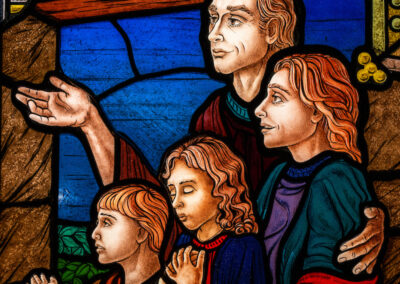
Every Christian — indeed, every human being — has been called by God into a family. Our very existence came about by our parents. Martin Luther said, “God has given this walk of life, fatherhood and motherhood, a special position of honor, higher than that of any other walk of life under it.”
Every Christian has a particular calling from God. With the doctrine of vocation, ordinary relationships, the 9-to-5 routine, taking care of the kids, the work-a-day world — the way we spend most hours of the day — become charged with the presence of God.
Marriage benefits are starting to go to those who are “shacking up.” As marriage becomes unnecessary — not just for job benefits but for adopting children, inheriting property, and being socially acceptable — the whole nation will be “living in sin.”
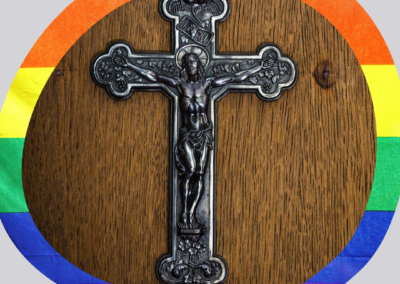
We dare not permit the church’s public teaching on the matter of homosexuality to be taken over and determined by a desire to “affirm” every person in whatever state he or she may be. That is not the gospel.

Homosexual behavior, like any sin, can be forgiven. That’s quite a different thing, of course, than to say that such behavior is OK.
We don’t choose our vocations; God chooses us for them. The Christian can understand the ordinary labors of life to be charged with meaning. Through our labor, no matter how humble, God is at work.
Christians are called to be citizens: to obey laws, pay their taxes, and honor and pray for their governing officials. Patriotic feelings and acts of civic-mindedness are fitting responses to the blessings God has given this country and the citizenship to which He has called us.
All Christians have a calling in the church. We all have been called into faith, and we all are called to a local congregation, where we each have a part to play in the community of faith.